Let’s be real—have you ever tried to impress someone? Maybe a crush, a boss, or that overly spiritual brother in church who prays in King James English. You go out of your way, adjusting your behavior, choosing your words carefully, maybe even throwing in a dramatic “God bless you, my brother!” to sound extra holy.
But what about God? Can we impress Him?
What Does It Even Mean to Impress God?
Impressing someone usually means doing something that makes them go, “Wow!” So, can we do something so remarkable that God, the One who created galaxies with a whisper, looks at us and says, “Wow, I didn’t see that coming”?
Well… not exactly.
1. God is Not a Man
First off, God isn’t human. He isn’t moved by human standards of “impressive.” You could pray for ten hours straight, fast for 40 days, and still, your righteousness is described as filthy rags (Isaiah 64:6). Compared to His perfection, our best efforts don’t make Him raise an eyebrow.
Think about it:
Solomon built a temple so glorious people traveled from distant lands to see it. Did God go, “Wow, Solomon, I’m speechless!”? No, instead, He said, “Heaven is my throne, and the earth is my footstool. Where is the house you will build for me?” (Isaiah 66:1). Basically: “Nice temple, Solomon, but I own the universe.”
Job was the most righteous man of his time, yet when he finally encountered God, all he could do was repent in dust and ashes (Job 42:5-6).
2. But… God DOES Delight in Us
Now, here’s where it gets interesting. Even though we can’t impress God in the way we impress people, we CAN please Him. There are things that delight God:
Faith:
“Without faith, it is impossible to please God”
(Hebrews 11:6)
A Humble Heart:
“These are the ones I look on with favor: those who are humble and contrite in spirit”
(Isaiah 66:2)
Obedience:
“To obey is better than sacrifice”
(1 Samuel 15:22)
In other words, God isn’t impressed by our efforts but by our heart posture. It’s like a little child drawing a crayon picture for their father. The father isn’t impressed by the artistic skill (because, let’s be honest, it’s mostly scribbles), but he treasures it because it came from love.
3. So, Should We Stop Trying?
Some people might say, “If I can’t impress God, what’s the point of striving for righteousness?” But that’s the wrong question. We don’t pursue holiness to impress God; we do it because we love Him. Just like a husband doesn’t try to “impress” his wife by buying flowers—he does it because he loves her.
Paul says,
“I press on to take hold of that for which Christ Jesus took hold of me”
(Philippians 3:12)
It’s not about impressing God; it’s about growing closer to Him.
Final Thoughts: What Actually Moves God?
A broken spirit and a contrite heart (Psalm 51:17).
Genuine faith, like that of the centurion (Matthew 8:10).
True worship, not performance (John 4:23-24).
So, can a man impress God? No. But can he touch God’s heart? Absolutely. Not by showing off, but by surrendering. That’s the paradox of the Christian life—the greatest way to “impress” God is to stop trying and start trusting.
Now Over to You:
Have you ever tried to impress God? What do you think truly delights Him? Drop a comment and let’s talk!
Ohhh, this is going to ruffle some feathers—but hey, truth has a way of doing that!
Let’s be real: we all know that one Christian who has been “born again” for 15 years but is still as impatient, rude, or unkind as ever. Maybe it’s a church leader who preaches fire on Sunday but is a nightmare to deal with on Monday. Or maybe—let’s be honest—sometimes that person is us.
So… why do some Christians never seem to change? Shouldn’t faith in Jesus transform us? Is it possible to be in church your whole life and still act exactly the same?
Buckle up—we’re about to unpack this.
Why Do Some Christians Never Seem to Change?
Spiritual Stagnation, Fake Growth, and the Difference Between Information & Transformation
I. The Expectation vs. The Reality
Let’s start with the Bible’s expectation of a Christian life:
✔ New birth (John 3:3) ✔ Ongoing transformation (Romans 12:2) ✔ Growing in love, joy, patience, kindness… (Galatians 5:22-23)
Now, compare this with the reality we often see:
❌ People who have been Christians for years but still gossip, slander, or hold grudges. ❌ Churchgoers who know the Bible inside out but lack love, humility, or integrity. ❌ Believers who talk about spiritual growth but never actually change.
What’s going wrong? Let’s break it down.
II. The 5 Big Reasons Why Some Christians Never Change
1. They Confuse Knowledge with Growth
There’s a huge difference between knowing the Bible and being transformed by it.
👉 Some people attend every Bible study, memorize verses, and debate theology—but their hearts remain unchanged. Why?
Because knowledge alone does not transform.
Jesus rebuked the Pharisees—they knew Scripture better than anyone, but their hearts were far from God (Matthew 23:27).
Real growth happens when we OBEY the Word, not just study it. (James 1:22)
✔ Knowledge says: “I know I should forgive.” ✔ Transformation says: “I actually forgive.”
2. They Rely on Church Attendance Instead of Real Discipleship
Some people think that showing up to church = spiritual growth.
🚫 They listen to powerful sermons but don’t apply them. 🚫 They enjoy worship but don’t worship outside Sunday services. 🚫 They serve in church but neglect their personal walk with God.
Church attendance is GOOD—but without personal devotion, it’s just religion.
The early church didn’t just gather once a week—they lived out their faith daily (Acts 2:46).
✔ Christianity is not a spectator sport. ✔ You don’t grow just by watching others live for Jesus—you grow by walking with Him yourself.
3. They Don’t Deal with Hidden Sin
Some people don’t change because they won’t let go of secret sins.
✔ Unforgiveness? Keeps us stuck (Matthew 6:14-15). ✔ Pride? Blocks transformation (Proverbs 16:18). ✔ Addiction? Chains the soul (Romans 6:16).
Let’s be blunt: you cannot grow in Christ while holding onto sin.
If you refuse to let God deal with the root issues, you’ll keep repeating the same struggles, year after year.
The hard truth: 🚫 God won’t transform what you refuse to surrender.
4. They Lack Spiritual Hunger
Some people don’t change because they’re spiritually lazy.
👉 They want the benefits of Christianity (peace, blessings) but don’t want to put in the effort (prayer, fasting, seeking God).
✔ They want wisdom but won’t read the Bible. ✔ They want breakthrough but won’t pray. ✔ They want anointing but won’t spend time with God.
Here’s the thing: growth requires pursuit.
“You will seek Me and find Me when you search for Me with all your heart.” (Jeremiah 29:13)
🔥 No hunger = No growth. 🔥
5. They Are Trying to Change Themselves (Instead of Letting God Do It)
This is huge. Many people try to change themselves instead of letting God transform them.
👉 They depend on self-discipline instead of God’s grace. 👉 They think trying harder will fix their spiritual life. 👉 They get frustrated when they keep failing.
But real transformation is God’s work, not ours.
“He who began a good work in you will carry it to completion.” (Philippians 1:6)
Our job? Surrender to Him. His job? Change us from the inside out.
✔ It’s not about striving—it’s about abiding. ✔ It’s not about struggling—it’s about surrender.
III. What’s the Solution? How Do We Truly Change?
If you’re tired of stagnant faith, here’s how real transformation happens:
1. Stop Just Listening—Start Doing
🚀 Don’t just hear the Word—apply it! (James 1:22) 🚀 Make small, daily choices to obey God, even when it’s hard.
2. Prioritize Relationship Over Religion
🔥 Growth isn’t about church attendance—it’s about knowing Jesus personally. 🔥 Spend time with Him in prayer, worship, and the Word—not just in services.
3. Be Brutally Honest With God
😨 Struggling with hidden sin? Confess it. 😨 Feeling spiritually dry? Tell Him. 😨 Need transformation? Ask for it.
The Holy Spirit is the One who changes hearts—but He won’t force transformation on you. You have to want it.
🔥 Your Turn! Let’s Talk 🔥
👉 Have you ever felt “stuck” in your faith? 👉 Which of these reasons do you relate to most? 👉 What practical step will you take TODAY toward real change?
Drop your thoughts in the comments! Let’s grow together. 🚀🔥
We’re about to dive headfirst into this topic, breaking it down layer by layer like peeling an onion (hopefully without tears). We’ll explore the history, the subtle shifts, the dangerous distortions, and how to return to a faith that’s purely biblical, not just cultural.
Brace yourself. This might get uncomfortable—but truth has a way of doing that.
Is Western Christianity Biblical or Just Cultural?
Have We Rewritten the Faith to Suit Our Preferences?
I. Where Did This All Begin?
To understand whether Western Christianity is more biblical or cultural, we have to take a quick history lesson.
1. The Early Church – Pure, Persecuted, and Uncompromising
The first Christians were countercultural rebels. They didn’t blend in—they stood out. Christianity wasn’t just a Sunday gathering; it was a life-consuming movement that:
✔ Met in homes (Acts 2:46) ✔ Sold possessions to help the poor (Acts 4:32-35) ✔ Faced severe persecution but never compromised (Acts 5:40-42)
No one joined Christianity for status, prosperity, or comfort—it was a call to die to self and live for Christ.
Then something changed.
2. The Roman Influence – When Faith Got Political
In 313 AD, Emperor Constantine legalized Christianity. Suddenly, the persecuted faith became the state religion. Good news, right? Not entirely.
What happens when faith is mixed with political power? Christianity shifted from a movement of radical discipleship to a structured institution:
✔ Christianity became mainstream (no more underground churches). ✔ Church leadership became hierarchical (bishops, councils, and eventually popes). ✔ Government and faith intertwined, creating state-controlled religion.
While this helped spread Christianity, it also injected culture into faith, making it harder to separate what was biblical from what was political or traditional.
3. The Reformation – A Fight for the Bible Over Tradition
Fast forward to 1517, Martin Luther sparks the Protestant Reformation. He realizes the church had drifted from Scripture and was now promoting man-made traditions:
🚫 Selling indulgences (paying money for forgiveness of sins? Seriously?) 🚫 Elevating church leaders as ultimate authorities (instead of Scripture) 🚫 Salvation by works + faith (instead of grace alone)
Luther’s biggest fight? Bringing the Bible back to the people. His famous stance:
“Unless I am convinced by Scripture and plain reason, I cannot recant. Here I stand, I can do no other.”
The Reformation was a victory for biblical Christianity, but here’s where it gets tricky—every revival movement carries cultural baggage.
Which brings us to…
II. How Western Culture Has Shaped Christianity
Now that we’ve seen where we started, let’s examine where we are today.
The Western world (Europe & America) has had a massive influence on modern Christianity, both good and bad.
Let’s break down four key areas where culture has shaped faith:
1. Individualism vs. Biblical Community
👉 “Jesus is my personal Savior.”
Nothing wrong with that, right? Actually, this is both biblical and cultural.
✔ The Bible teaches that salvation is personal (Romans 10:9). ❌ But Western culture takes this further—faith becomes just “me and Jesus”, ignoring the community aspect of Christianity.
Contrast this with biblical Christianity:
✔ The early church was deeply communal. They shared everything (Acts 4:32). ✔ They lived life together daily. No such thing as “lone-wolf Christianity” (Hebrews 10:25).
The Western cultural shift: Faith became private and individualistic—which is why many Christians today struggle with accountability, church commitment, and true fellowship.
2. The Comfort-Driven Gospel – Faith Without the Cross
Western culture idolizes comfort. And sadly, so does much of Western Christianity.
👉 Sermons get shorter because people have short attention spans. 👉 Worship services feel like concerts instead of God encounters. 👉 Messages avoid conviction so that no one feels uncomfortable.
But let’s be real: Christianity was never meant to be comfortable.
Jesus said:
“Whoever wants to be my disciple must deny themselves, take up their cross daily, and follow me.”
(Luke 9:23)
❌ Modern Christianity says: “God just wants you to be happy.” ✅ Biblical Christianity says: “God calls you to be holy.” (1 Peter 1:16)
If our faith costs us nothing, it may not be true Christianity—just a cultural imitation.
3. The Prosperity Gospel – Jesus as a Money Machine
If you’ve ever heard: “God wants you to be rich and successful!”—congratulations, you’ve encountered Westernized Christianity’s greatest export: the prosperity gospel.
🚫 “Sow a seed of $1000 and God will bless you!” 🚫 “If you have faith, you’ll never struggle financially!” 🚫 “God wants every Christian to drive a Benz!”
But here’s what Jesus actually said:
“Do not store up for yourselves treasures on earth… but store up treasures in heaven.”
(Matthew 6:19-20)
Now, does God bless His people? Absolutely. Does He promise material wealth to every believer? Nope.
Western Christianity often equates God’s favor with financial success—but Scripture teaches that blessings come in many forms (spiritual growth, character, joy in suffering).
4. Secular Influence – When Culture Redefines Truth
Western society loves moral flexibility. The world says:
❌ “Truth is subjective.” ❌ “Follow your heart.” ❌ “Don’t judge—love means accepting everything.”
And sadly, many churches have absorbed this thinking.
But the Bible is clear:
✔ Truth is absolute.“Your WORD is truth.” (John 17:17) ✔ Our hearts are deceptive.“The heart is deceitful above all things.” (Jeremiah 17:9) ✔ Love means truth-telling.“Speak the truth in love.” (Ephesians 4:15)
Western Christianity sometimes compromises truth in order to be “inclusive” and not offend people. But Jesus didn’t come to fit into culture—He came to change it.
III. How Do We Return to Biblical Christianity?
So, what now? How do we strip away cultural distortions and get back to biblical faith?
1. Test Everything Against Scripture
Culture changes. The Bible doesn’t (Isaiah 40:8).
2. Prioritize Obedience Over Comfort
Faith isn’t about convenience—it’s about commitment (Luke 9:62).
3. Seek a Kingdom Perspective
Christianity isn’t American, African, or Asian—it’s a global, eternal kingdom (Revelation 7:9).
4. Stay Connected to Authentic Christian Community
Isolation weakens faith—community strengthens it (Acts 2:42).
🔥 Your Turn!
👉 Do you think Western Christianity has drifted from biblical faith? 👉 What cultural influences do you see in your own faith? 👉 How can we return to true, biblical Christianity?
Let’s talk! Drop your thoughts in the comments. 🚀🔥
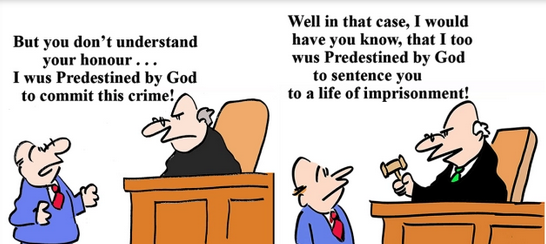
Ever wondered if your choices really matter? Like, are you the driver of your own destiny, or is God behind the wheel, controlling every turn?
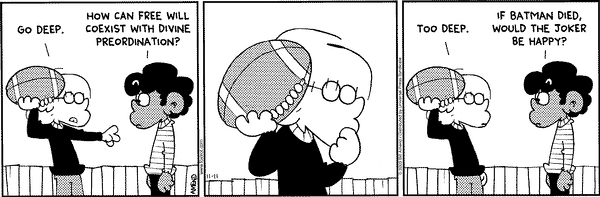
Think about it—if God already knows who will be saved, does that mean some people are just doomed from the start? If salvation is purely God’s choice, does that mean our faith and obedience don’t matter? And if we actually have free will, does that make God less sovereign?
This question has divided Christians for centuries.
Some say, “God is in full control of salvation!”
Others respond, “But He gave us free will!”
And the crazy thing? Both seem to be in the Bible.
So, let’s wrestle with one of the most profound mysteries of faith:
Do we choose God, or did He already choose us?
1. The Case for “God Chooses” (Predestination)
Imagine you’re applying for university, but instead of you picking the school, the school picks you—before you even know what education is. That’s how some people view salvation.
Key Scriptures:
“He chose us in Him before the foundation of the world.”
(Ephesians 1:4)
“So then it depends not on human will or exertion, but on God, who has mercy.”
(Romans 9:16)
“You did not choose me, but I chose you.”
(John 15:16)
This is where Calvinism (or Reformed Theology) comes in.
It teaches that:
✔️ God, in His sovereignty, has already chosen who will be saved (the elect).
✔️ No one comes to God unless He enables them (John 6:44).
✔️ If salvation depends on human effort, it’s no longer grace but works.
What About Those Who Aren’t Chosen?
This is where things get uncomfortable. If God predestines some people for salvation, does He also predestine others to be lost?
That’s called double predestination—the idea that just as God elects some to eternal life, He also passes over others, allowing them to continue in their rebellion.
Paul wrestles with this:
“Shall the thing formed say to Him who formed it, ‘Why have You made me like this?’”
(Romans 9:20-21)
This can feel unfair. But the argument goes: If God is truly sovereign, doesn’t He have the right to do as He wills?
But hold on… doesn’t that contradict other parts of the Bible?
2. The Case for “We Choose” (Free Will)
Now, let’s flip the script. Imagine a father stretching out his hand to a child. The father doesn’t force the child to take his hand—the child has to choose to grasp it.
Key Scriptures:
“Choose this day whom you will serve.”
(Joshua 24:15)
“For God so loved the world that He gave His only Son, that whoever believes in Him should not perish.”
(John 3:16)
“God is not willing that any should perish, but that all should come to repentance.”
(2 Peter 3:9)
This is the Arminian (or Free Will) Perspective, which says:
✔️ Salvation is offered to everyone, but you must accept it.
✔️ God desires all people to be saved, but He won’t force them (1 Timothy 2:4).
✔️ Faith is a response to God’s grace, not an automatic result of election.
But Doesn’t That Make God Less Sovereign?
Some argue that if humans have free will, it could mean God isn’t fully in control. What if someone rejects Him? Wouldn’t that mean God’s will isn’t always done?
This leads to another big debate:
Does God predestine based on His will alone (Calvinism)?
Or does He predestine based on who He foreknows will believe (Arminianism)?
Romans 8:29 hints at this:
“For those whom He foreknew, He also predestined.”
Some believe this means God’s choice is based on knowing ahead of time who would choose Him.
So, which one is true?
3. Where Do Predestination and Free Will Connect?
At first glance, these two ideas seem contradictory. But what if… they actually work together?
Think of it like this:
Imagine salvation as a door. On the outside, you see a sign that says, “Whoever Will May Come.”
But once you step inside, you turn around and see another sign that says, “Chosen Before the Foundation of the World.“
God’s Sovereignty + Our Responsibility = The Mystery of Salvation
How Both Are True in Scripture:God is 100% sovereign. He knows the end from the beginning. (Isaiah 46:10)We are 100% responsible. We must choose to follow Him. (Acts 16:31)
Salvation is a gift, not earned. But a gift must be received. (Ephesians 2:8-9)
Some theologians explain it like this:
🔹 From God’s perspective (eternal view): He knows exactly who will be saved and has predestined their salvation.
🔹 From our perspective (human view): We genuinely make choices that determine our eternal destiny.
This paradox isn’t something to “solve.” It’s something to trust—because the truth is, no one comes to God apart from His grace, but no one is turned away who truly seeks Him.
4. What Does This Mean for Us?
At the end of the day, this debate shouldn’t just stay in our heads—it should shape how we live.
🔥 Instead of stressing, seek Jesus! (Matthew 6:33)
🔥 Instead of debating endlessly, share the gospel boldly! (Romans 1:16)
🔥 Instead of wondering if you’re “chosen,” make sure you choose Him today! (2 Corinthians 6:2)
Because one thing is certain: No one ever got to heaven by debating theology—but plenty have by trusting in Jesus.
What Do You Think?
👉 Do you lean more towards predestination or free will?
👉 Can both be true at the same time?
👉 How does this change how you live your faith?
Drop your thoughts in the comments—let’s wrestle with this together! 🔥😊