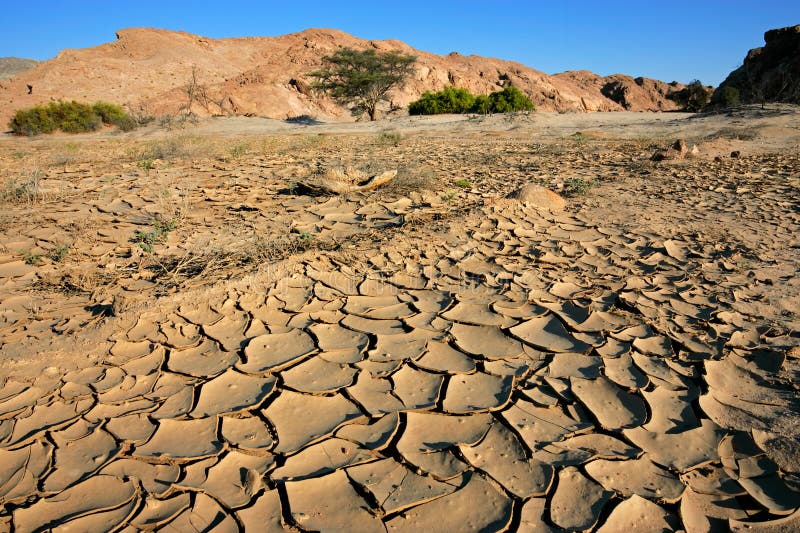


What If I Don’t Feel God’s Presence Anymore?

David was alone.

The once vibrant songs that had poured from his heart felt empty now. The melodies that had once stirred his soul now echoed against stone walls. His prayers—oh, how many had he prayed?—felt like they were vanishing into the night air.

He sat on the cold floor of a cave, running a hand through his tangled hair. Where was God?

The boy who had once stood in fields, overwhelmed by God’s nearness, now sat in exile, haunted by silence. The same David who had killed a giant with reckless faith now ran from a king who wanted him dead. He had done everything right—or so he thought. He had obeyed. He had trusted. And yet, all he heard now was… nothing.

"O God, why have You forsaken me?" (Psalm 22:1)

Sound familiar?

Maybe your cave isn’t made of rock, but it feels just as cold. Maybe you remember a time when God felt so real, so close, but now? Now, it feels like you’re praying to the wind. Reading the Bible, but the words don’t move you. Worshiping, but the songs feel hollow.

And so you wonder:

What if I don’t feel God’s presence anymore? What does that mean?

Let’s talk about it.

1. You’re Not the First (And You Won’t Be the Last)

If feeling distant from God meant we were doomed, then half the Bible’s greatest heroes wouldn’t have made it.

David: "Why, Lord, do You stand far off? Why do You hide Yourself in times of trouble?" (Psalm 10:1)
Job: "I go to the east, but He is not there. I go to the west, but I cannot find Him." (Job 23:8)
Even Jesus Himself: "My God, My God, why have You forsaken Me?" (Matthew 27:46)

These weren’t weak people. These were giants of faith—and yet, they felt abandoned too.

So, if you’ve ever thought, “Maybe I’m not spiritual enough. Maybe my faith isn’t real,“—STOP. Feeling distant from God doesn’t mean you’ve failed. It means you’re human.

2. Faith Isn’t About Feelings (And That’s a Good Thing)

Imagine a married couple. The first few years are fireworks, butterflies, and constant affection. But fast forward a decade, and the love is quieter, deeper—not always felt, but still real.

Faith is the same way.If our faith depended on feelings, we’d be in trouble. Because let’s be honest—our feelings change faster than the weather. But here’s the good news: God’s presence is not based on your emotions.

Think about it:

The sun is still shining even when you don’t feel its warmth.
A parent still loves their child even when the child doesn’t "feel" it.
God is still present, even when you don’t feel Him.

Faith is holding on to what you know to be true—not just what you feel in the moment.

3. Why Do We Go Through These Dry Seasons?

If God loves us, why would He let us feel distant?Here’s the thing—sometimes, God removes the feelings so we can build real faith.

Think of it like this: A child learning to walk clings to their parent’s hands. But one day, the parent lets go—not to abandon them, but to teach them how to stand.

Could it be that in this season, God is letting you stand?

Sometimes, He’s growing your faith in the silence.

Other times, it’s something else:Sin & Distractions – Have you drifted? Are there things pulling your focus away from Him?

Busyness & Noise – Are you so overwhelmed with life that you haven’t really stopped to seek Him?

Unrealistic Expectations – Have you been looking for a “spiritual high” instead of steady faith?

Take a moment. Ask yourself—is God distant, or am I just distracted?

So what now? If you’re in that dry season, what can you do?

4. What Can You Do When You Don’t Feel God?

A. Keep Showing Up

David didn’t stop writing Psalms just because he felt abandoned. He kept worshiping, kept praying, kept trusting.

Even when you don’t feel it—keep showing up.Read the Word. Pray. Worship. Not because you feel like it, but because God is still worthy.

B. Go Back to What You Know

When feelings fail, lean on truth:
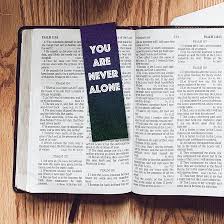
📖 “I will never leave you nor forsake you.” (Hebrews 13:5)
📖 “Draw near to God, and He will draw near to you.” (James 4:8)
📖 “Even when I walk through the darkest valley, I will fear no evil, for You are with me.” (Psalm 23:4)

C. Be Honest With God

God is not shocked by your struggles. He’s not disappointed in your doubt. So tell Him.

Pray,

“Lord, I don’t feel You right now. But I trust You. Help me in this season.”

Remember: Honest faith is stronger than fake faith.

D. Talk to Someone

You are not meant to do faith alone. Find a mentor, a friend, a pastor—someone to walk with you. Sometimes, just speaking your struggles out loud breaks the power of isolation.

The Good News: This Won’t Last Forever

David didn’t stay in the cave forever. The same man who cried, “Why have You forsaken me?” also wrote, “The Lord is my Shepherd, I lack nothing.”Seasons of dryness don’t last forever.

So if you don’t feel God right now, don’t give up. Keep walking, keep trusting, keep holding on.

Because even in the silence,

God is still with you.

What About You?

Have you ever gone through a season where you didn’t feel God?

What helped you get through it?

What’s one truth you hold onto in tough times?

Drop a comment—I’d love to hear your thoughts! ⬇️⬇️⬇️

https://forms.gle/PcZ5sCBVv3Khy5xNA

P.S. If you’re reading this and thinking, “Well, I don’t feel like commenting”—too bad, I’m calling you out. 😜 Let’s talk!
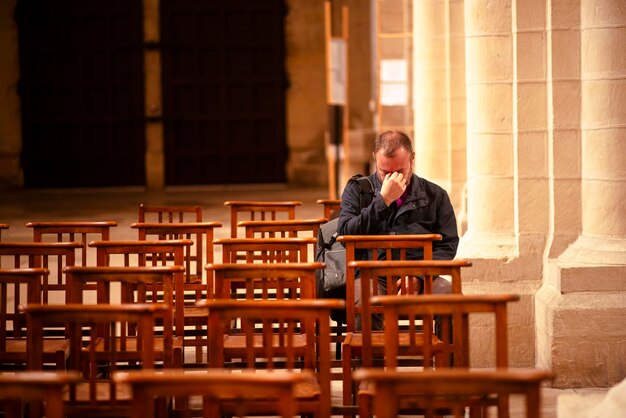

When Faith Feels Empty – What Then?

“I need Thee, oh I need Thee, every hour I need Thee…”

Ever sung those words but felt nothing?Ever sat in church, heard a powerful sermon, watched people around you lift their hands in worship… and felt absolutely disconnected?

Ever prayed and wondered if your words were just bouncing off the ceiling?

Ever felt like you’re going through the motions of faith, but it’s just… hollow?You pray, but the words feel empty.

You read the Bible, but it’s just words on a page.

It’s not that you don’t believe. It’s not that you’ve turned away. It’s just that—somewhere along the way—faith started to feel… empty.

And if that’s where you are, you’re not alone.

You show up to church, but your heart’s not in it.

And deep down, you wonder:

"Is something wrong with me?"
"Did I lose my faith?"
"Where is God in all of this?"

If you’ve ever felt that way, you’re not crazy, you’re not alone, and you’re definitely not a “bad Christian.”

Faith isn’t always fireworks and mountaintop moments. Sometimes, it’s a slow, quiet walk through a spiritual desert.

In fact, some of the greatest people of faith have walked through this very struggle.

So… what do you do when faith feels empty?

When the passion is gone? When all you have left is routine?

Let’s talk about it.

https://forms.gle/PcZ5sCBVv3Khy5xNA

Asking Why: Is Questioning God the Same as Doubting Him?

Alright, let’s be real for a second.

Most of us have had that moment. You know the one—where life hits you like a rogue wave, and suddenly, you’re looking up at the sky (or at your untouched Bible, or into your cold cup of coffee) thinking, “God… seriously? What is going on?”

Maybe you prayed hard for something, and all you got was radio silence.

Maybe life sucker-punched you when you least expected it.

Maybe you’ve just read one too many “Just have faith” quotes and thought, “Yeah, but HOW?”

So, here’s the million-dollar question:

Does questioning God mean we don’t trust Him?

Or could it be that wrestling with God is actually a sign of faith?

Buckle up. This one’s gonna be interesting.

1. If Questioning God Is Wrong, the Bible Is in Trouble

If God had a problem with people asking “Why?”, then half the Bible wouldn’t exist. No, really—some of the most raw, unfiltered conversations between people and God are full of deep questions.

Look at these legends:

Job: “Why do the wicked live on, growing old and increasing in power?”

(Job 21:7)

David: “How long, O Lord? Will You forget me forever?”

(Psalm 13:1)

Jeremiah: “You deceived me, Lord, and I was deceived…”

(Jeremiah 20:7)

Habakkuk: “Why do You tolerate wrongdoing? Why are You silent while the wicked swallow up those more righteous than themselves?”

(Habakkuk 1:3, 13)

These weren’t your everyday skeptics. These were prophets, kings, and God’s chosen people—and they were out here throwing some heavy questions at Him.

And guess what? God didn’t zap them into oblivion.

He engaged with them.

That tells us something big: God can handle our toughest questions.

2. Questioning God vs. Doubting God (Not the Same Thing, Folks)

Imagine two students in a classroom.🧐 Student A raises their hand and asks, “Teacher, I don’t understand this. Can you explain?”😒 Student B folds their arms and says, “This is nonsense. I don’t believe a word you’re saying.”

Both are questioning, but only one is actually seeking answers.

See the difference?

Doubt says, “God isn’t trustworthy.”

Questioning says, “God, I don’t understand, but I want to.”

One closes the door. The other knocks, hoping Someone opens it.

3. History’s Boldest God-Wrestlers (And How It Turned Out for Them)

Let’s take a little trip down history lane. Some of the greatest minds in faith wrestled with God—and it didn’t ruin them. It shaped them.

🔥 C.S. Lewis – The guy who gave us Mere Christianity and The Chronicles of Narnia? Yeah, he was once an atheist who raged at God for not existing. (Let that contradiction sink in for a second.) His deep questions led him to one of the most profound faith journeys in history.

🔥 Mother Teresa – We know her as the saintly woman who cared for the poor, but did you know she battled decades of spiritual darkness? In private letters, she wrote about feeling abandoned by God. Yet, she kept serving. Kept believing. Kept searching.

🔥 Martin Luther – The guy who kicked off the Reformation? He struggled deeply with doubt, questioning salvation and God’s justice. But instead of walking away, he dug deeper—and the world changed because of it.

4. Wait… Jesus Questioned God Too? (Plot Twist!)

Yep. The ultimate mic-drop moment:

📖 “My God, My God, why have You forsaken Me?”

Matthew 27:46

Think about that.

The Son of God Himself asked the ultimate “why” question.

Yet, did that mean He lacked faith? No. His questioning was an expression of pain, not disbelief. And even after asking, He still surrendered:

📖 “Father, into Your hands I commit My spirit.”

Luke 23:46

If Jesus could question and trust at the same time, then surely there’s room for us to do the same.

5. So… What Do We Do With Our Questions?

Here’s the deal: God is not afraid of your questions.

If anything, He welcomes them.True faith isn’t about pretending we have all the answers—it’s about bringing our uncertainty to God and trusting Him enough to wrestle through it.

So, next time you have big, heavy, life-altering questions, try this:

  • ✔️ Ask honestly. God already knows what’s in your heart, so why sugarcoat it?
  • ✔️ Seek answers. Read, study, pray. The best questions lead to the deepest discoveries.
  • ✔️ Hold on. Even when answers don’t come right away. Faith isn’t about instant clarity—it’s about trusting in the waiting.

What About You? 🤔Have you ever felt guilty for questioning God?

Do you think churches talk about this enough, or is it one of those “hush-hush” topics?

What’s one big question about faith that’s kept you up at night?

Drop a comment—I’d love to hear your thoughts!

⬇️⬇️⬇️https://forms.gle/PcZ5sCBVv3Khy5xNA

https://forms.gle/PcZ5sCBVv3Khy5xNA

https://forms.gle/PcZ5sCBVv3Khy5xNA

P.S. If you don’t engage, I might just have to personally ask you your toughest faith question next time we meet. 😜

Is Christianity Anti-Science?

“Can you be a Christian and still believe in science?”

It’s a question that makes some people uncomfortable. Others scoff at it.

After all, isn’t Christianity built on ancient myths, while science is based on hard facts? Isn’t faith about blind belief, while science demands proof? Hasn’t science already buried God?That’s what some say.

But what if I told you this whole “Christianity vs. Science” debate is built on a lie?

What if faith and reason aren’t enemies, but partners?

What if some of the greatest scientific discoveries weren’t made in opposition to God, but in pursuit of Him?

Before jumping to conclusions, let’s confront the hard questions head-on.

1. Has Science Made God Obsolete?

For centuries, skeptics have said that as science advances, faith must retreat. “We don’t need God anymore,” they argue, “because now we understand how things work.”

But let’s stop and think.

Does understanding how something works mean it has no Creator?

If you study the engineering of a car, does that prove Henry Ford didn’t exist?If you analyze brushstrokes on a painting, does that mean the artist was never there?

If you explain how a smartphone functions, does that mean there was no designer?

Of course not!

Science can tell us how the universe works, but it can’t tell us why it exists in the first place. It can study biology, but it can’t explain where human consciousness, morality, and purpose come from.

Even some of the greatest scientific minds admit this. Nobel Prize-winning physicist Steven Weinberg once said:

> “The more the universe seems comprehensible, the more it also seems pointless.”

Science, by itself, doesn’t offer meaning. It describes reality, but it doesn’t prescribe purpose. And deep down, we all crave something beyond cold facts and equations.

That’s where faith steps in—not to replace science, but to answer the questions science can’t.

2. The Myth That Christianity Opposes Science

Many people believe Christianity has always been anti-science. They bring up Galileo being persecuted for teaching that the Earth revolves around the sun, or the church rejecting Darwin’s theory of evolution.

But let’s look at the full picture.If Christianity were truly opposed to science, then why did so many founders of modern science—the very people who shaped the way we understand the world—believe in God?

Isaac Newton, the father of physics, wrote more about the Bible than about gravity.

Johannes Kepler, who discovered planetary motion, called science “thinking God’s thoughts after Him.”Gregor Mendel, the founder of genetics, was a monk.

Blaise Pascal, the mathematician and physicist, was also a devout Christian.

These weren’t ignorant men. They were brilliant, rational thinkers. And they didn’t see faith as a roadblock to science—they saw it as the very foundation for exploring the universe.

Because if the universe was designed by an intelligent God, then wouldn’t it make sense that it could be studied, measured, and understood?

Science wasn’t born in opposition to faith. It was born out of faith.

3. The False Choice: Faith vs. Science

People often say you have to pick one: Faith or Science.

But why?

Let’s look at a real-life example.

Imagine a scientist studying a boiling pot of water. Science can explain how the water boils—by measuring temperature, pressure, and molecular movement.

But if you ask, “Why is the water boiling?”, there’s another answer: “Because someone put it on the stove to make tea.”

One explanation is scientific. The other is personal.

Both are true.Similarly, science explains the mechanics of the universe, while faith explains its meaning. They answer different questions, and both are necessary for a full understanding of reality.

4. Miracles vs. Science: Do They Contradict?

Some argue that Christianity is unscientific because it believes in miracles—supernatural events that “violate” natural laws.But pause for a second.Even science tells us that reality isn’t as simple as we think.

Take the Big Bang theory, for example. The idea that the universe exploded into existence from nothing sounds eerily similar to Genesis 1:1:

> “In the beginning, God created the heavens and the earth.”

Or consider DNA—a complex code of information inside every cell.

When scientists discovered DNA, atheist philosopher Antony Flew was forced to admit that it was so complex, it had to have been designed. He eventually abandoned atheism and said:

> “The only satisfactory explanation for the origin of life as we see it is an infinitely intelligent Mind.”

If science itself suggests that the universe had a beginning, and that life is coded with intelligent design, then is it really irrational to believe in a Creator?

5. The Real Reason People Reject Faith

Let’s be honest.

A lot of people reject Christianity not because of science, but because they don’t want it to be true.

Atheist scientist Richard Lewontin once admitted:

> “We take the side of science in spite of the patent absurdity of some of its constructs, because we have a prior commitment to materialism… We cannot allow a Divine Foot in the door.”

Did you catch that?

He’s saying that some scientists choose to exclude God—not because the evidence demands it, but because they’ve already decided that faith isn’t an option.

But truth doesn’t depend on what we want. It depends on what is real.

6. Faith and Science—Partners, Not Enemies

Instead of seeing faith and science as rivals, what if we saw them as partners?Science tells us how the universe works. Faith tells us who is behind it.

Science studies creation. Faith knows the Creator.

Science gives us knowledge. Faith gives us wisdom.

Some of the most brilliant modern scientists—such as Francis Collins, who led the Human Genome Project—are devout Christians.

Why?

Because they see no contradiction between following evidence and following God.

Real faith is not blind. It is informed, tested, and lived out in the real world.—Final Thoughts: Can a Christian Be Pro-Science?

Absolutely.

Christianity is not anti-science. It is pro-truth. And all truth—whether found in a laboratory or in Scripture—comes from God.

If you’re a scientist, you don’t have to abandon faith.

And if you’re a Christian, you don’t have to fear science.

So, what do you think?

  • Do you believe science and faith can coexist? Why or why not?
  • Have you ever struggled to reconcile faith with scientific discoveries?
  • What scientific discoveries have deepened your faith?

Let’s talk in the comments. I’d love to hear your thoughts! 👇

https://forms.gle/PcZ5sCBVv3Khy5xNA

https://forms.gle/PcZ5sCBVv3Khy5xNA